
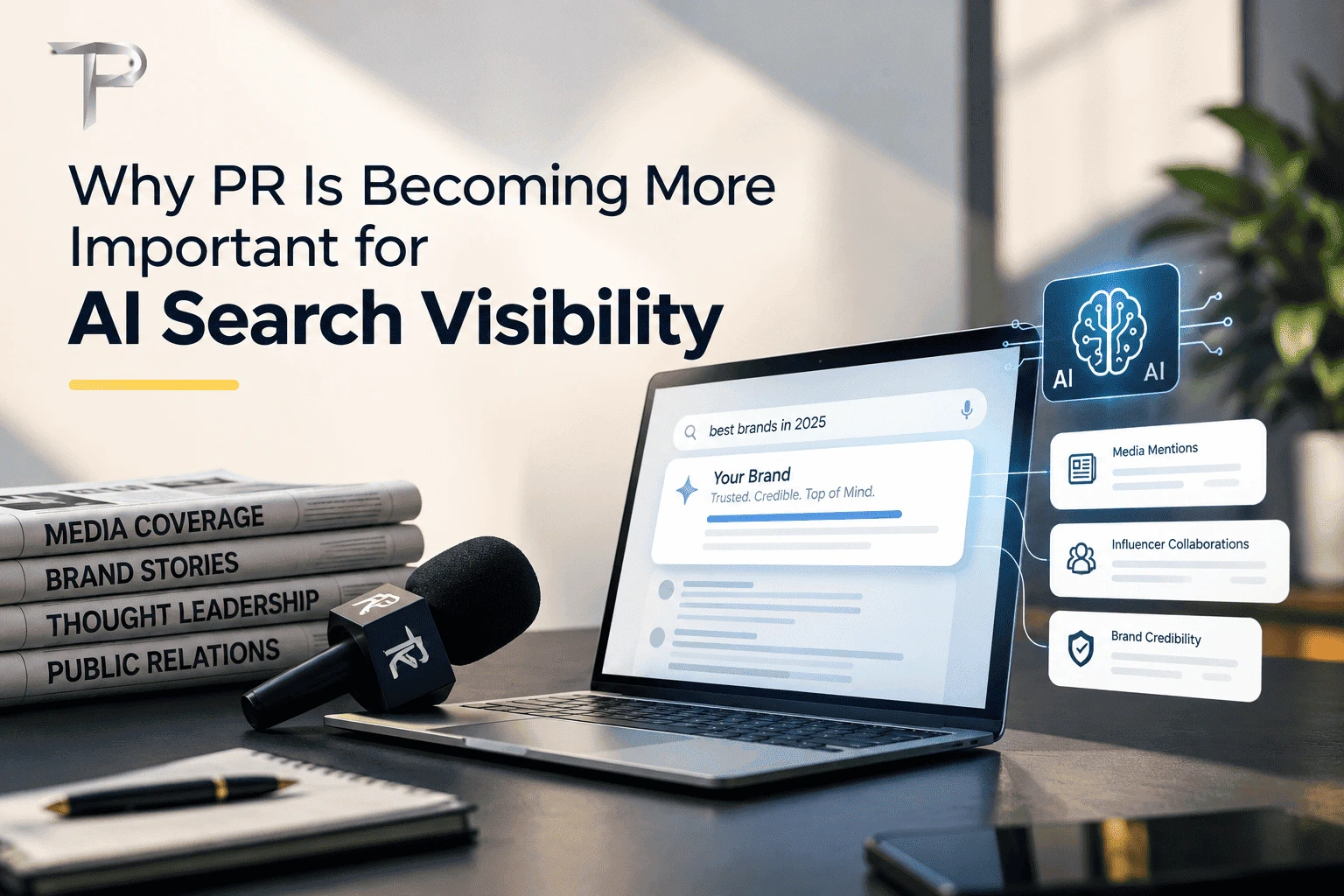
Ask ChatGPT, Gemini or Perplexity to recommend a good brand in almost any category, and you’ll get a neat, confident answer. A few names, a line or two about each, sometimes a source link. No ten blue links. No scrolling.
Now here’s the question we keep hearing from founders and marketing heads: “Why does the AI mention our competitor and not us?”
The honest answer, more often than not, has little to do with their website and everything to do with what the rest of the internet says about them. That’s where public relations steps back into the spotlight. Not as a nice-to-have for press clippings, but as one of the strongest levers a brand has for showing up in AI-generated answers.
Let’s break down why.
How People Search Has Quietly Changed
For two decades, search worked in a predictable way. You typed a query, Google showed a list of pages, and you clicked around until you found what you needed. Brands competed for those top spots through SEO.
That model hasn’t disappeared, but it’s sharing space now. Google’s AI Overviews sit above the regular results for many queries. Millions of people go straight to AI assistants to compare products, shortlist vendors or understand a topic. Instead of browsing ten pages, they read one summarised answer.
That shift changes the goal. It’s no longer only about ranking a page. It’s about being the brand the AI chooses to mention, cite and describe accurately when someone asks a question in your space.
What AI Search Engines Actually Look For
AI tools don’t “know” your brand the way a loyal customer does. They piece together an understanding from what’s written about you across the web. A few patterns matter a lot.
Trust Is Borrowed, Not Claimed
Your website can say you’re the leading name in your industry. AI systems give far more weight to that claim when a respected publication, an industry body or an independent expert says it. Credibility from others beats self-description every time.
Consistency Across the Web
If your brand is described the same way in news articles, interviews, directories and your own site, AI tools can form a clear picture. If the story is scattered or contradictory, they either get it wrong or skip you altogether.
Fresh, Quoted, Real Voices
AI answers often lean on recent coverage, expert quotes and well-sourced articles. A founder quoted in a business daily, or a spokesperson commenting on an industry trend, gives these systems something concrete and credible to draw from.
Notice something? Every one of these is classic PR territory.
Why PR Has Moved to the Centre of AI Visibility
Earned Media Is the Raw Material AI Learns From
AI search tools draw heavily on published, publicly available content. News stories, features, interviews and expert columns make up a big part of that. When your brand appears in trusted media, you’re quite literally feeding the sources AI relies on.
Third-Party Mentions Beat Self-Promotion
Ads stop working the moment you stop paying. Your blog is helpful, but it’s still you talking about you. Earned coverage is different: someone else chose to write about you. That independent validation is exactly the kind of signal Google’s quality guidelines and AI systems both lean towards.
PR Builds the Brand, Not Just the Page
Traditional SEO often focuses on individual pages and keywords. PR builds something bigger: a recognisable brand with a clear identity, known leaders and a reputation. AI tools try to understand who you are, what you do and who you serve. A steady media presence makes that picture sharper and your brand easier to recommend.
How PR, SEO, AEO and GEO Now Work Together
There are a lot of acronyms flying around, so let’s keep it simple.
SEO helps your website rank in traditional search. AEO (Answer Engine Optimisation) helps your content get picked as the direct answer to a question. GEO (Generative Engine Optimisation) helps your brand show up in AI-generated responses.
PR is the thread running through all three. Good coverage earns quality backlinks for SEO, gives answer engines credible sources to quote, and builds the reputation that generative engines reward. Treating them as separate silos is where many brands quietly lose ground.
Practical Steps to Make Your Brand Visible in AI Search
1. Start With a Clear, Repeatable Story
Before chasing coverage, get clear on what you want to be known for. Two or three core messages, said consistently, beat a dozen scattered ones. If you can’t describe your brand in one clean sentence, an AI tool won’t manage it either.
2. Get Featured Where It Counts
Not all coverage is equal. Focus on outlets your audience trusts and that AI tools are likely to treat as reliable.
a) National and Business Publications
These carry strong authority and are widely referenced. A well-placed feature or founder interview can shape how your brand is described for a long time.
b) Industry and Trade Media
Niche publications show depth. They tell AI systems and buyers alike that you’re a serious player in your specific field.
c) Podcasts, Panels and Expert Columns
Transcripts, event write-ups and bylined articles create more places where your expertise is documented in your own words.
3. Make Your Leaders Quotable
Journalists need sharp, useful comments on what’s happening in the industry. Position your founders and senior team as go-to voices. Every quote attached to a name and a brand adds another credible reference point.
4. Make Your Leaders Quotable
Journalists need sharp, useful comments on what’s happening in the industry. Position your founders and senior team as go-to voices. Every quote attached to a name and a brand adds another credible reference point.
5. Keep Your Own Content Aligned
Your website, LinkedIn pages and Google Business Profile should tell the same story your coverage tells. Keep an updated media page, clear “about” information and FAQ-style content that answers real customer questions directly.
6. Track Mentions, Not Just Rankings
Start checking how AI tools describe your brand. Ask them the questions your customers ask. Are you mentioned? Is the description accurate? Which sources show up? This gives you a practical view of the gaps and which stories to pursue next.
Why the Right PR Partner Makes the Difference
All of this sounds simple on paper. In practice, it takes real relationships with journalists, a sharp sense of what makes a story newsworthy, and the patience to build reputation steadily rather than chasing one-off headlines.
That’s why brands increasingly look for PR companies in Mumbai and other media hubs that understand both traditional media and the new AI-driven search landscape. When comparing the top PR agencies in Mumbai, ask a few direct questions. Do they understand how coverage feeds into search and AI visibility? Do they plan for consistency across channels? Can they show quality placements rather than a long list of low-value mentions?
How That PR Firm Helps Brands Get Seen, Trusted and Cited
At That PR Firm, we’ve watched the media landscape reinvent itself more than once, and this shift is one of the biggest yet. Our approach blends strategic storytelling, strong media relationships and a clear understanding of how coverage shapes search and AI visibility.
We help brands sharpen their narrative, earn meaningful coverage in the publications that matter, position leaders as credible industry voices, and keep that story consistent everywhere it appears. The result isn’t just press. It’s a reputation that people, and the AI tools they now rely on, recognise and trust.
Final Thoughts
AI search hasn’t made PR less relevant. It’s made it impossible to ignore. The brands that show up in AI answers tomorrow are the ones building credible, consistent, third-party visibility today.
If your competitors keep getting mentioned and you don’t, you probably don’t need a technical fix. You need a reputation strategy.
Frequently Asked Questions
1. Why is PR important for AI search visibility?
AI search tools rely on credible, third-party sources to decide which brands to mention. PR earns coverage in trusted publications, giving AI systems reliable references that describe your brand and increasing your chances of being cited.
2. Can PR help my brand appear in ChatGPT or Google AI Overviews?
Yes. These tools draw on published content such as news articles, interviews and expert columns. Consistent coverage in reputable media makes it more likely your brand is recognised, described accurately and recommended in AI answers.
3. What is the difference between SEO and GEO?
SEO helps your website rank in traditional search results. GEO, or Generative Engine Optimisation, helps your brand appear in AI-generated answers. GEO depends heavily on reputation and third-party mentions, which is where PR plays a key role.
4. How long does PR take to improve AI search visibility?
Most brands notice early signs within three to six months of consistent coverage. Building a strong reputation that AI tools reliably reference takes longer and works best as an ongoing effort, not a one-off campaign.
5. How can That PR Firm help my brand show up in AI search?
That PR Firm builds a clear brand story, earns coverage in trusted publications, positions your leaders as expert voices and keeps your messaging consistent online, giving AI tools credible sources to reference your brand.