
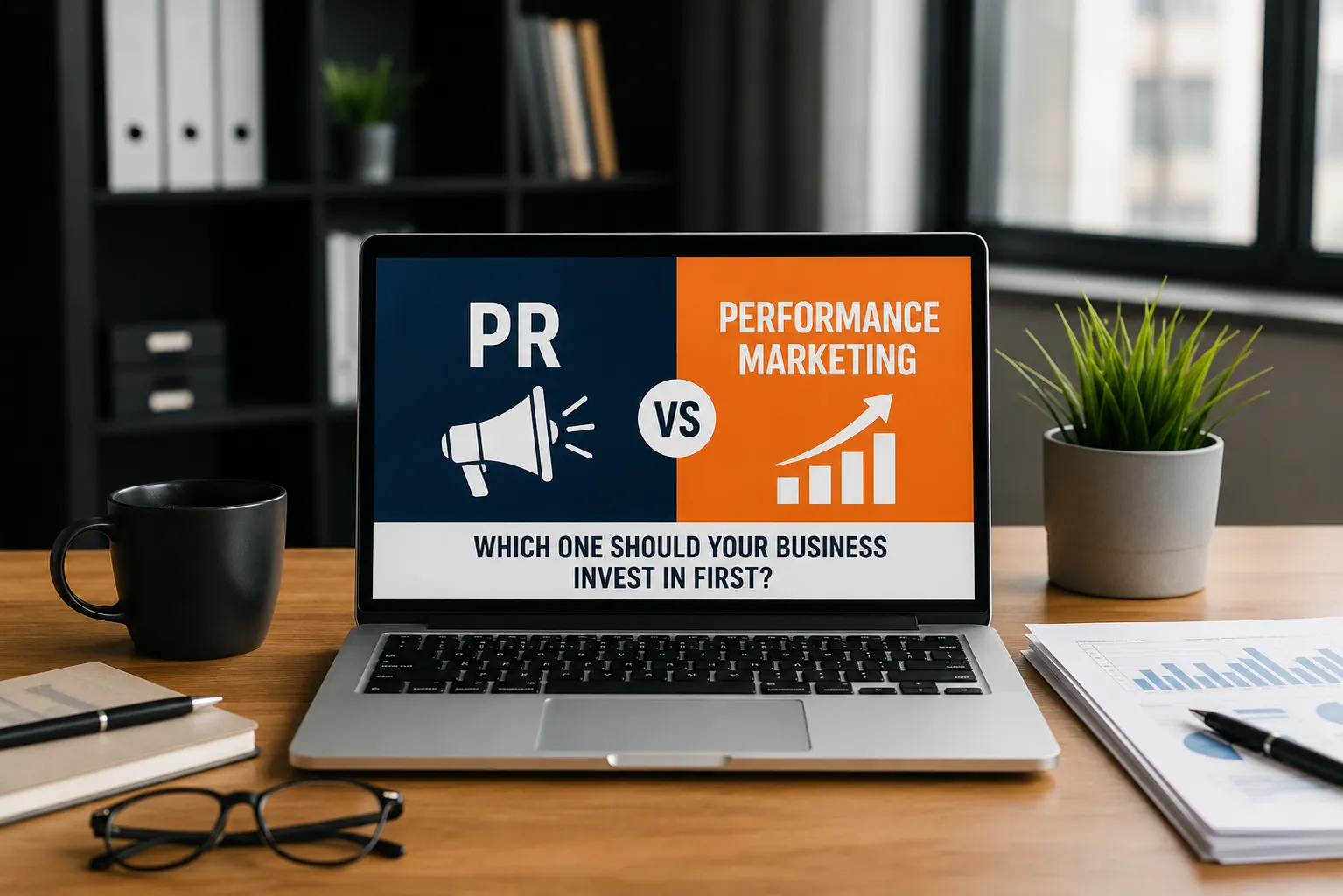
When you’re growing a business, every marketing rupee matters. One of the most common questions business owners ask is: Should I invest in PR or Performance Marketing first?
The answer isn’t the same for everyone. It depends on your business stage, goals, budget, and how quickly you want results.
If you’ve been searching for a reliable PR Agency in Mumbai or wondering whether paid ads are a better investment, this guide will help you understand the difference in simple terms. By the end, you’ll know which approach is right for your business and when it’s the right time to use both together.
Although both help businesses grow, they work in completely different ways.
What is PR?
Public Relations (PR) focuses on building your brand’s reputation and credibility. Instead of directly paying people to buy your product, PR helps people trust your business through media coverage, interviews, news articles, thought leadership, podcasts, influencer collaborations, and brand stories.
The goal of PR is simple:
- Build trust
- Increase brand awareness
- Create a positive public image
- Position your business as an industry leader
Think of PR as planting a tree. It takes time to grow, but once it does, it keeps giving value for years.
What is Performance Marketing?
Performance marketing focuses on measurable actions. Businesses pay for specific results like clicks, leads, app installs, purchases, or sign-ups.
Popular performance marketing channels include:
- Google Ads
- Meta (Facebook & Instagram) Ads
- LinkedIn Ads
- YouTube Ads
- Search Ads
- Shopping Ads
Every campaign has measurable numbers like:
- Cost per click (CPC)
- Cost per lead (CPL)
- Return on Ad Spend (ROAS)
- Conversion rate
If PR builds trust, performance marketing drives immediate action.
PR vs Performance Marketing: The Biggest Difference
PR | Performance Marketing |
Builds credibility | Generates leads and sales |
Long-term results | Short-term results |
Earned media | Paid advertising |
Difficult to measure instantly | Easy to measure |
Creates authority | Creates conversions |
Neither is better than the other. They simply solve different business problems.
A Real-Life Example
Imagine two skincare brands launching in Mumbai.
Brand A:
The company spends ₹2 lakh on Google and Instagram ads.
Within one month:
- 1.8 million ad impressions
- 6,500 website visitors
- 220 online orders
The sales look impressive.
But once they stop running ads, traffic immediately drops by almost 80%.
Brand B
Instead of spending everything on ads, they invest in PR.
They receive:
- Features in online publications
- Interviews with the founder
- Reviews from beauty influencers
- Expert quotes in skincare articles
Their website traffic grows gradually over six months.
When customers search the brand name, they find trusted articles, media mentions, and influencer recommendations.
Even if paid ads stop, people continue discovering the brand through search results and recommendations.
Both brands achieved success, but in different ways.
When Should You Choose PR First?
PR is often the better investment if your business is trying to build trust before scaling sales.
Choose PR first if:
You’re launching a new brand: People don’t buy from businesses they’ve never heard about. PR helps introduce your brand to the market.
You’re entering a competitive industry: Industries like healthcare, finance, education, real estate, beauty, and technology require credibility. Media coverage makes people more confident in choosing your business.
You want long-term growth: Unlike advertisements that stop when your budget ends, PR content can continue bringing visibility for months or even years.
You have a founder with a story: Founders who share their journey often receive media attention that helps build stronger customer connections.
When Should You Choose Performance Marketing First?
Sometimes businesses simply need customers immediately.
That’s where Performance Marketing becomes the smarter first investment.
Choose performance marketing if:
- You have a proven product
- You want immediate website traffic
- You need leads quickly
- You’re running seasonal offers
- You’re launching an e-commerce store
For example:
A furniture company launches a Diwali sale for just 15 days.
Waiting for PR coverage may take longer than the campaign itself.
Running Google Search Ads and Meta Ads can start generating leads within hours.
That’s where performance marketing delivers faster results.
Which One Gives Better ROI?
This is probably the most searched question. The truth is:
It depends on what you measure. Performance marketing provides faster ROI because results are visible almost immediately.
For example:
Spend ₹50,000 on Google Ads.
Generate:
- 500 leads
- 50 customers
You can calculate your exact return.
PR works differently. Suppose your founder gets featured in five respected publications.
Over the next year:
- Investors notice your company.
- Customers trust your brand more.
- Journalists begin contacting you.
- Speaking opportunities increase.
- Organic search traffic grows.
The financial return may not appear in a weekly report, but the long-term business value can be significant.
Can PR Improve Performance Marketing Results?
Yes, and this is where many businesses make costly mistakes.
Imagine two advertisements.
Advertisement A
Unknown company.
No reviews.
No media mentions.
No customer trust.
Advertisement B
The same product.
But this time customers also find:
- News articles
- Expert interviews
- Influencer recommendations
- Positive media coverage
Which advertisement would you trust more? Most people naturally choose the second option.
That’s because PR increases credibility, making paid advertising more effective.
Studies across digital marketing consistently show that consumers are far more likely to purchase from brands they already recognize and trust.
The Best Strategy for Growing Businesses
Instead of thinking about PR versus performance marketing, think about your current business stage.
Stage 1: New Business
Focus on:
- Brand identity
- PR
- Organic content
- Website
Stage 2: Growing Business
Add:
- Google Ads
- Social media ads
- Lead generation campaigns
Stage 3: Established Brand
Combine:
- PR
- Performance marketing
- Influencer marketing
- SEO
- Content marketing
- Brand partnerships
This combination creates both short-term revenue and long-term brand value.
Common Mistakes Businesses Make
Expecting PR to generate instant sales: PR builds awareness first. Sales often follow later.
Depending only on paid ads: If every customer comes through advertisements, your growth becomes expensive.
Ignoring brand reputation: A strong reputation can improve customer trust before they even visit your website.
Measuring everything the same way: Performance marketing is measured through conversions. PR is measured through visibility, credibility, reach, brand mentions, and long-term impact. Comparing both using the same metrics can lead to the wrong decisions.
So, Which One Should You Invest In First?
If your business is completely new and people don’t know your brand yet, start by building trust and visibility through PR while maintaining a basic digital presence.
If your business already has a trusted product and you’re ready to increase enquiries or sales quickly, performance marketing can deliver faster results.
For most businesses, the strongest strategy isn’t choosing one over the other, it’s knowing when to use each. PR creates awareness and credibility, while performance marketing turns that trust into measurable leads and sales.
Final Thoughts
There is no universal winner in the PR vs performance marketing debate because every business has different goals. The smartest brands understand that sustainable growth comes from balancing both approaches rather than relying on just one.
If you’re unsure where to begin, working with experienced professionals can help you avoid unnecessary spending and build a strategy that matches your business objectives. That PR Firm helps businesses create the right mix of PR, influencer marketing, and digital strategies so they can build trust, improve visibility, and achieve meaningful growth over the long term.
Key Takeaways
- PR and Performance Marketing serve different purposes. PR builds trust and credibility, while Performance Marketing focuses on generating measurable leads and sales.
- PR is a long-term investment. It helps your business gain media visibility, improve brand reputation, and stay relevant even after campaigns end.
- Performance Marketing delivers faster results. Paid advertising can quickly drive traffic, enquiries, and conversions when you need immediate growth.
- Your business stage matters. New businesses often benefit from building brand awareness through PR first, while established businesses can scale faster with Performance Marketing.
- The best results come from using both together. PR creates trust, making your paid campaigns more effective and improving overall marketing ROI.
- A balanced marketing strategy supports sustainable growth. Combining PR, SEO, content marketing, influencer marketing, and Performance Marketing helps businesses build both short-term revenue and long-term brand value.
Frequently Asked Questions (FAQs)
1. Which is better: PR or Performance Marketing?
It depends on your goal. PR helps build trust and brand awareness, while Performance Marketing helps you get leads and sales quickly.
2. Can PR and Performance Marketing work together?
Yes. PR builds trust, and Performance Marketing helps convert that trust into customers. Using both often gives the best results.
3. Is Performance Marketing good for small businesses?
Yes. It helps small businesses reach the right audience and measure results like clicks, leads, and sales.
4. Can PR improve the results of paid ads?
Yes. When people see positive media coverage or trusted mentions, they’re more likely to click on your ads and make a purchase.
5. How do I choose between PR and Performance Marketing?
Think about your goal. If you want long-term brand awareness, choose PR. If you need quick results, choose Performance Marketing. Many businesses benefit from using both together.