
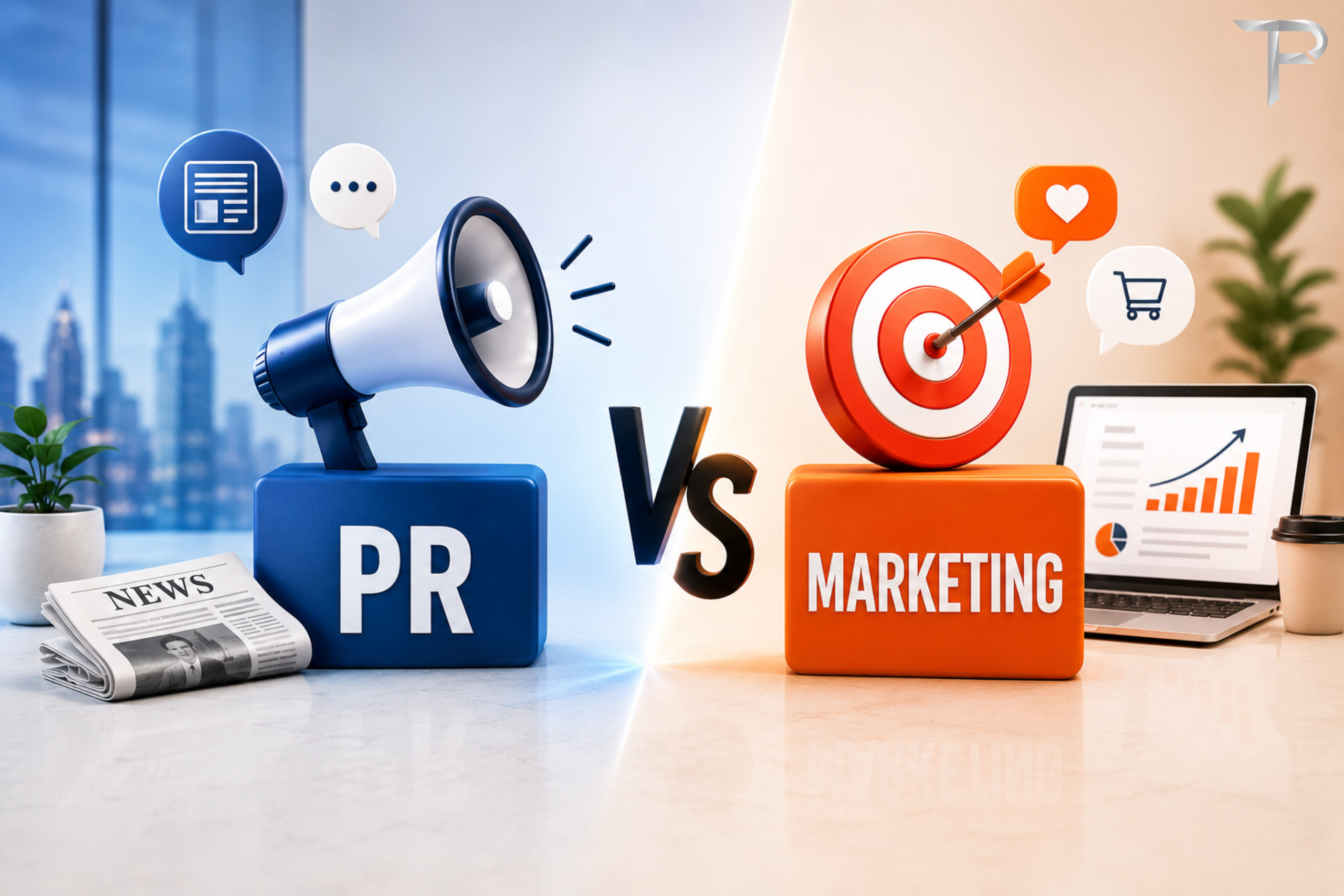
In today’s digital world, every brand wants visibility, trust, and sales. But many businesses still get confused between PR and Marketing. Are they the same? Do you need both? Or should you focus on just one?
This confusion is very common, especially among startups and growing businesses. That’s why many brands today work with the top PR agencies in Mumbai to understand how Public Relations and Marketing can help them grow in the right direction.
At That PR Firm, we often meet business owners who think PR and Marketing are exactly alike. But in reality, both play very different roles in building a successful brand.
Marketing helps you sell your products or services. PR helps people trust your brand. Both are important, but they work in different ways.
In this blog, we’ll explain the 7 key differences between PR and Marketing in very simple terms with practical examples so you can understand which strategy your business needs.
What is PR?
Public Relations (PR) is all about building a positive image for a brand.
PR helps businesses:
- Build trust
- Get media coverage
- Improve reputation
- Increase brand awareness
- Connect with the audience emotionally
PR activities include:
- Media articles
- Press releases
- Influencer collaborations
- Celebrity endorsements
- Brand events
- Interviews
- Reputation management
For example, if your brand gets featured in a news article or a famous influencer talks positively about your product, that is PR. The main goal of PR is not direct selling. It is about creating trust and long-term credibility.
What is Marketing?
Marketing is the process of promoting products or services to generate leads, customers, and sales.
Marketing activities include:
- Social media ads
- Google ads
- SEO
- Email marketing
- Paid influencer campaigns
- Website promotions
- Sales campaigns
For example, when a clothing brand runs Instagram ads offering “Flat 50% Off,” that is marketing. Marketing focuses mainly on attracting customers and increasing revenue.
PR vs Marketing: Why People Get Confused
The confusion happens because both PR and Marketing help brands grow.
- Both increase visibility.
- Both improve brand awareness.
- Both use social media and digital platforms.
But the way they work is completely different.
Think of it this way:
- Marketing says: “Buy our product.”
- PR says: “Here’s why people trust our brand.”
Now let’s understand the 7 major differences.
1. PR Builds Trust, Marketing Drives Sales
This is the biggest difference, Marketing focuses on sales and conversions, PR focuses on reputation and credibility.
Example: Imagine a skincare brand launches a new face serum.
Marketing Activity: The brand runs Instagram ads and Google ads to sell the product.
PR Activity:Beauty influencers and media websites review the serum and talk about its benefits.
Which one feels more trustworthy? Most people trust reviews and recommendations more than advertisements. According to studies, over 85% of consumers trust earned media more than paid ads. That is the power of PR.
2. Marketing is Paid, PR is Earned
Marketing usually requires paid promotions.
You pay for:
- Ads
- Sponsored posts
- Influencer campaigns
- Billboard promotions
PR works differently. PR earns attention naturally through:
- Media coverage
- News articles
- Word-of-mouth
- Interviews
- Influencer mentions
Real-Life Example:
If a restaurant pays for Facebook ads, that is marketing.
But if the restaurant gets featured in a “Top Cafes in Mumbai” article, that is PR.
People often trust earned publicity more because it feels genuine.
3. Marketing Gives Quick Results, PR Builds Long-Term Value
Marketing campaigns usually give faster results.
For example:
- More website traffic
- More app downloads
- More sales
PR takes time but creates long-term brand value.
Example:
A startup may run ads for immediate visibility. But if the founder gets featured in business magazines or podcasts, it creates authority that benefits the brand for years.
This is why established brands invest heavily in PR even after becoming successful.
Strong reputation helps businesses survive market competition.
4. PR Focuses on Brand Image, Marketing Focuses on Promotion
Marketing promotes products.
PR promotes the brand story.
PR tells people:
- Who you are
- What your values are
- Why your brand matters
- What makes you different
Example:
Nike advertisements promoting shoes are marketing. But Nike supporting social causes and getting media attention for campaigns is PR. People today connect more with brands that have strong stories and values. That emotional connection is created through PR.
5. PR Uses Media Relations, Marketing Uses Advertising
PR works closely with:
- Journalists
- Media houses
- Bloggers
- Influencers
- News websites
Marketing mostly uses:
- Paid ads
- SEO campaigns
- Social media promotions
- Performance marketing
Today, influencer marketing also plays a major role in both PR and Marketing. Many brands now work with an Influencer marketing agency in Mumbai to collaborate with creators who can build trust and improve online visibility.
Real-Time Example:
When a fashion influencer genuinely reviews a brand on Instagram, audiences often trust it more than direct ads. According to reports, influencer campaigns can deliver up to 11 times higher ROI compared to traditional digital ads. That is why influencer collaborations are becoming an important part of modern PR strategies.
6. PR Handles Crisis Situations, Marketing Usually Doesn’t
One major role of PR is reputation management during difficult times.
If a brand faces:
- Negative reviews
- Social media backlash
- Public controversy
- Product complaints
PR teams handle communication carefully.
Marketing cannot solve reputation damage alone.
Example: When airlines face customer complaints online, PR teams issue statements and manage public communication. Similarly, celebrities and big brands often use PR teams during controversies to maintain public trust. A strong PR strategy protects a brand’s image during tough situations.
7. PR and Marketing Work Better Together
Many businesses think they must choose one.
But the truth is: The best brands use both PR and Marketing together.
Marketing Helps:
- Increase sales
- Generate leads
- Drive traffic
- Promote offers
PR Helps:
- Build credibility
- Improve trust
- Strengthen brand image
- Create emotional connection
Example: Imagine a new café opening in Mumbai.
Marketing Team:
- Runs Instagram ads
- Promotes discounts
- Creates social media campaigns
PR Team:
- Invites influencers
- Gets media coverage
- Organizes launch events
- Builds online buzz
Together, both strategies help the café grow faster and build trust.
Why PR Matters More in 2026
Today’s consumers are smarter than eve, People no longer trust advertisements alone.
Before buying, customers usually:
- Read reviews
- Check influencer opinions
- Search online articles
- Look at brand reputation
Research shows that more than 70% of people research a brand online before making a purchase. This is why PR has become extremely important today.
Modern PR now includes:
- Digital PR
- Influencer marketing
- Online reputation management
- Personal branding
- Podcast features
- Social media storytelling
PR is no longer limited to newspapers or magazines, It is now a major part of digital brand growth.
Which One Does Your Brand Need?
Here’s a simple answer.
You Need Marketing If:
- You want immediate sales
- You want leads quickly
- You want to run paid campaigns
- You want faster conversions
You Need PR If:
- You want people to trust your brand
- You want media visibility
- You want influencer credibility
- You want long-term brand value
You Need Both If:
- You want sustainable growth
- You want a strong online presence
- You want trust plus sales
Most successful brands today combine PR and Marketing for better results.
Final Thoughts
PR and Marketing are not competitors, They are two important parts of brand growth. Marketing helps customers discover your brand. PR gives customers a reason to trust it.
In today’s crowded digital market, trust matters more than ever. People connect with brands that feel authentic, relatable, and credible.
That’s why businesses are increasingly investing in PR, influencer collaborations, and storytelling strategies to build stronger customer relationships.
At That PR Firm, the goal is not just visibility but meaningful brand growth through strategic PR campaigns, influencer partnerships, and reputation-building strategies that create long-term impact.
As one of the growing PR companies in Mumbai, the focus is always on helping brands create trust, build authority, and stand out in a highly competitive market.Lorem ipsum dolor sit amet, consectetur adipiscing elit. Ut elit tellus, luctus nec ullamcorper mattis, pulvinar dapibus leo.