
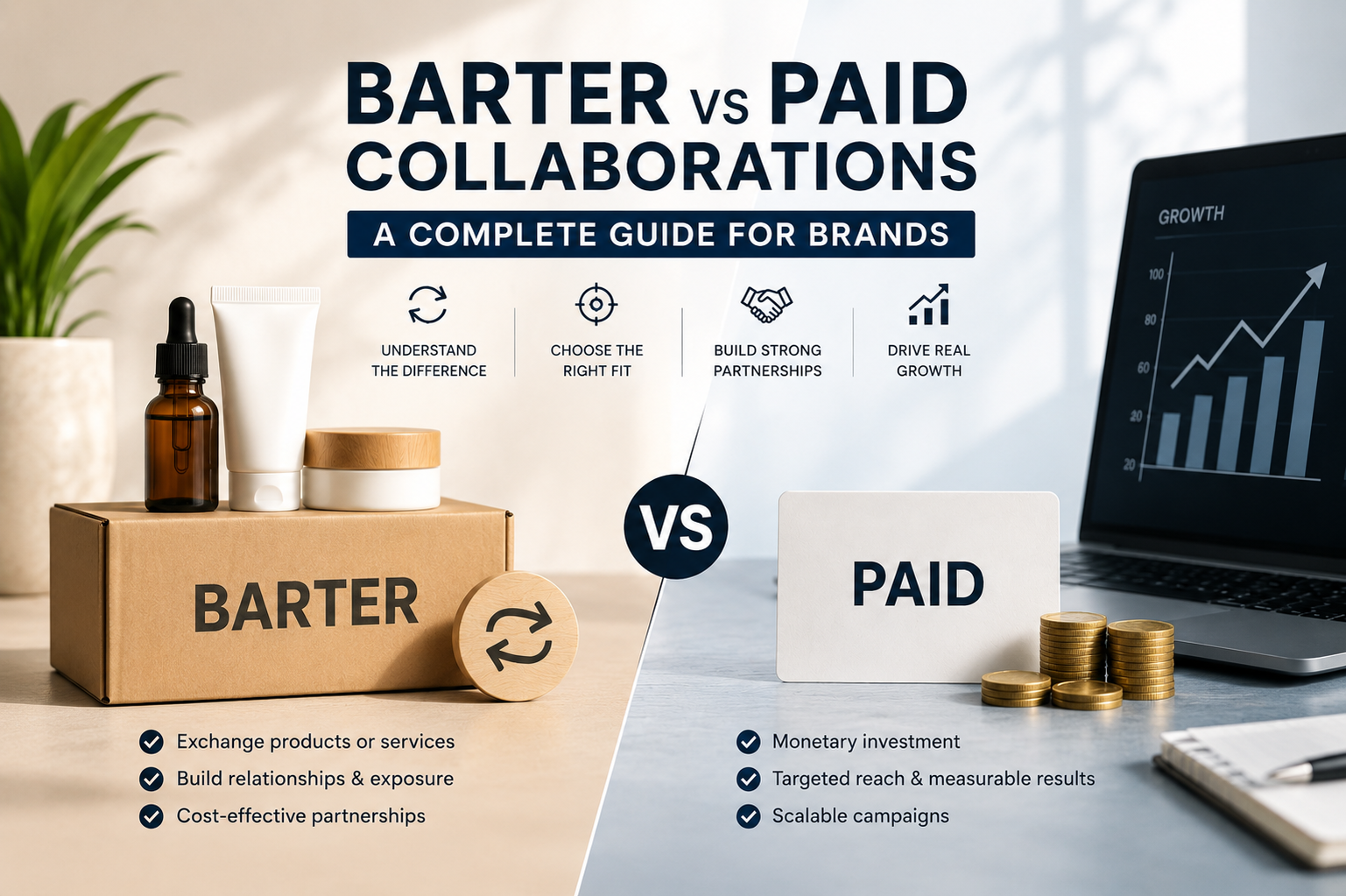
Introduction
Today, influencer marketing has become one of the biggest ways for brands to reach customers online. From fashion and skincare to cafes and tech startups, almost every business is collaborating with influencers to grow visibility and sales.
But one question still confuses many brands:
Should you go for barter collaborations or paid collaborations?
This is where many businesses struggle, especially smaller brands that are just starting out. A good Influencer marketing agency in Mumbai often helps brands understand which collaboration type actually suits their goals, budget, and audience.
The truth is, both barter and paid collaborations can work well. But choosing the wrong one can waste both money and time.
In this blog, we’ll break down:
- What barter collaborations are
- What paid collaborations mean
- Which one gives better results
- Real examples
- Costs involved
- Pros and cons
- What brands should choose in different situations
Everything is explained in simple language so that even first-time business owners can understand it easily.
What Is a Barter Collaboration?
A barter collaboration means: A brand gives free products or services to an influencer in exchange for content or promotion. No direct payment is involved.
Example:
A skincare brand sends products worth ₹3,000 to a beauty influencer.
The influencer creates:
- 1 Instagram reel
- 2 story posts
- 1 feed post
Instead of paying cash, the brand offers products.
Why Brands Choose Barter Collaborations
Many startups and small businesses prefer barter because:
- Lower budget requirement
- Easy to start
- Good for product visibility
- Helps generate initial buzz
This works especially well for:
- Fashion brands
- Jewellery brands
- Cafes
- Beauty products
- Home décor businesses
What Is a Paid Collaboration?
A paid collaboration means the influencer receives money for promoting the brand. The payment depends on:
- Follower count
- Engagement rate
- Content quality
- Niche
- Platform
Example:
A creator with 100,000 followers may charge:
- ₹8,000–₹25,000 for one reel
- ₹3,000–₹10,000 for story promotions
Larger creators may charge even more.
Why Paid Collaborations Often Perform Better
Paid collaborations usually involve:
- Better planning
- Professional content
- More effort from creators
- Dedicated posting schedules
- Better campaign consistency
When influencers are paid properly, they often create higher-quality content because it becomes professional work rather than casual promotion.
Barter vs Paid Collaborations: Main Difference
Factor | Barter Collaboration | Paid Collaboration |
Payment | Free products/services | Monetary payment |
Best For | Small businesses | Bigger campaigns |
Budget Needed | Low | Medium to high |
Creator Motivation | Sometimes limited | Usually stronger |
Content Quality | Can vary | More professional |
Brand Control | Less | More |
ROI Tracking | Difficult | Easier |
When Barter Collaborations Work Best
Barter collaborations can work really well in certain situations.
1. Product Launches
If your goal is simply visibility, barter can help generate multiple posts quickly.
Example: A candle brand sends products to 20 micro influencers. Even if each influencer has only 5,000 followers, the combined reach may cross 100,000 people.
2. Startups with Small Budgets
New businesses often cannot spend ₹1 lakh immediately on influencer marketing. Barter becomes a practical starting point.
3. Gifting Campaigns
Festive hampers, PR kits, and launch boxes often perform well as barter campaigns.
When Paid Collaborations Work Better
1. Sales-Focused Campaigns
If your goal is:
- Website traffic
- Product sales
- App downloads
- Lead generation
Paid collaborations usually work better.
2. Big Campaign Launches
When brands want:
- Professional execution
- Better storytelling
- Consistent posting
- Stronger reach
Paid campaigns become more reliable.
3. Long-Term Influencer Partnerships
Influencers give better long-term commitment when they are compensated fairly.
Real Example: Barter Campaign
Imagine a small jewellery brand.
They send:
- 15 necklace sets
- Worth ₹2,000 each
Total investment:
₹30,000
They receive:
- 12 reels
- 20 stories
- Multiple user-generated content pieces
For awareness campaigns, this can work beautifully.
Real Example: Paid Campaign
Now imagine a skincare brand launching a new serum.
They hire:
- 5 creators
- ₹20,000 each
Total investment:
₹1,00,000
The campaign generates:
- 1.5 million reach
- 8,000 website clicks
- 1,200 orders
This type of result is more common in properly planned paid campaigns.
What Influencers Prefer Today
The creator economy has changed a lot.
Earlier: Many creators accepted barter
Now: Quality creators prefer paid collaborations
Why? Because:
- Content creation takes time
- Shooting requires effort
- Editing costs money
- Professional creators treat influencing as a business
That’s why brands need realistic expectations.
How Brands Should Decide
Here’s a simple rule:
Choose Barter If:
- You are a startup
- Your budget is limited
- Your goal is awareness
- Your product itself has good gifting value
Choose Paid Collaborations If:
- You want conversions
- You need guaranteed deliverables
- You want premium content
- You are running a large campaign
Why Strategy Matters More Than Budget
Many brands think spending more money automatically gives better results.
Not true.
A smart campaign with:
- Right creators
- Proper audience targeting
- Good storytelling
- Authentic content
Often performs better than expensive influencer campaigns without strategy.
That’s why many businesses now look for professional influencer marketing services in Mumbai to plan campaigns properly instead of randomly approaching influencers.
The Future of Influencer Marketing
The influencer marketing industry in India is growing rapidly.
According to industry reports:
- India’s influencer marketing market is expected to cross ₹3,000 crore in the next few years.
- Short-form video platforms continue driving creator growth.
- Brands are increasingly focusing on ROI-based collaborations.
This means:
- Creator partnerships will become more professional
- Paid collaborations will grow further
- Long-term partnerships will become more important
Final Thoughts
There is no single “correct” answer in barter vs paid collaborations. Both models can work extremely well when used correctly.
The key is understanding:
- Your goals
- Your audience
- Your campaign expectations
- Your available budget
For some brands, barter collaborations create amazing visibility. For others, paid campaigns generate stronger sales and better long-term results. The smartest brands usually combine both approaches strategically.
Key Takeaways
- Barter collaborations involve free products instead of payment
- Paid collaborations involve monetary compensation
- Barter works well for startups and awareness campaigns
- Paid collaborations work better for conversions and professional campaigns
- Micro influencers often provide strong engagement
- Strategy matters more than follower count
- Clear communication improves campaign success
- Influencer marketing works best when goals are properly defined
- Both barter and paid collaborations can deliver excellent results when planned correctly
If your brand wants to build meaningful influencer campaigns with the right creators and strategy, working with experienced professionals can help you avoid costly mistakes and achieve better results faster.