
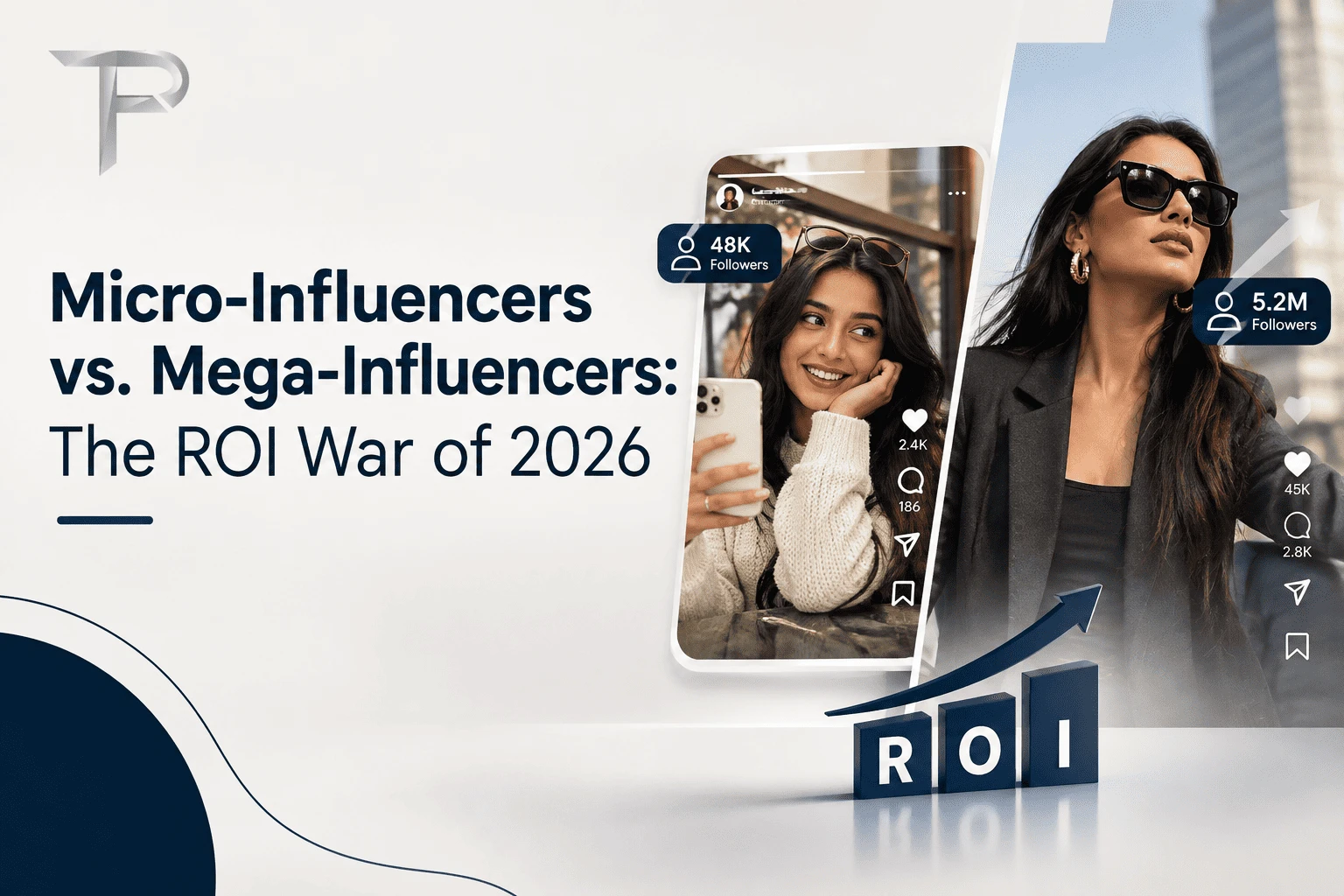
For years, influencer marketing followed a simple formula: more followers meant better results.
Brands wanted celebrities and creators with millions of followers because a bigger audience appeared to guarantee bigger visibility. But influencer marketing in 2026 is becoming more nuanced. Brands are no longer asking only, “How many people will see this post?” They are asking, “Will the right people see it, trust it and take action?”
That is where the debate between micro-influencers and mega-influencers becomes important.
Micro creators can offer stronger niche relevance, community engagement and cost efficiency, while mega-influencers can deliver enormous reach and instant brand visibility. Recent Indian industry discussions also point towards brands becoming more focused on measurable outcomes rather than follower count alone.
So, which one gives better ROI in 2026?
The honest answer is: it depends on what your campaign is trying to achieve.
Current 2026 pricing guides also show that creator costs can vary substantially based on platform, niche, deliverables, usage rights and creator reputation, making follower count alone an unreliable way to estimate campaign value.
What Is a Micro-Influencer?
Micro-influencers generally have a smaller but highly focused audience. A commonly used industry range is around 10,000 to 100,000 followers, although definitions can vary between platforms and agencies. Their strength is not massive reach. It is relevance. A beauty creator may have 40,000 followers who actively follow skincare recommendations. A food creator may have 25,000 followers who regularly discover restaurants through their content. A Mumbai-based fashion creator may have a highly relevant local audience interested in shopping, lifestyle and trends. For brands, this can mean fewer wasted impressions and more meaningful interactions.Why Brands Like Micro-Influencers
Micro creators often have closer relationships with their audiences. Their content can feel less like a traditional advertisement and more like a recommendation from someone the audience already follows and trusts. They can also be useful when a campaign needs:- Niche audience targeting
- Product discovery
- Local visibility
- Engagement
- User-generated content
- Leads or conversions
- Multiple content pieces within a fixed budget
What Is a Mega-Influencer?
Mega-influencers operate at the opposite end of the spectrum. They generally have 1 million or more followers, although the exact classification varies. Their biggest advantage is scale. When a brand launches a major product, enters a new market or wants to create a large cultural moment, a mega creator can put the campaign in front of a huge audience quickly. Think about a national fashion launch, a large consumer electronics campaign or a major festive promotion. In such cases, mass visibility can be extremely valuable. Mega-influencers can help brands achieve:- Rapid awareness
- Large-scale reach
- Brand association
- Product-launch visibility
- Social buzz
- Celebrity-style positioning
Micro vs. Mega Influencers: Which Offers Better ROI?
This is where brands need to look beyond follower numbers. Imagine two campaigns with the same budget. One uses a single mega-influencer. The other works with several carefully selected micro-influencers. The mega campaign may generate a much larger number of impressions. The micro campaign, however, may generate more conversations, saves, comments, product questions and trackable actions from a more relevant audience. That doesn’t automatically make micro creators the winner. If the objective is mass awareness, the mega creator may deliver better business value. If the objective is engagement, consideration or conversion, a carefully selected group of micro creators may be more efficient. The right question is therefore not: “Who has more followers?” It is: “Which creator can deliver the outcome my brand needs?”A Simple ROI Comparison
| Factor | Micro-Influencers | Mega-Influencers |
|---|---|---|
| Audience size | Smaller | Very large |
| Niche targeting | Strong | Moderate |
| Engagement potential | Often higher | Often lower |
| Mass awareness | Moderate | Excellent |
| Cost efficiency | Usually stronger | Usually lower |
| Local targeting | Strong | Limited |
| Content volume for budget | Higher | Lower |
| Brand prestige | Moderate | Strong |
| Conversion potential | Strong for relevant niches | Depends heavily on fit |
| Best for | Performance & targeted campaigns | Awareness & large launches |
When Should a Brand Choose Micro-Influencers?
Micro creators can be particularly effective for brands that want targeted visibility rather than simply maximum visibility. For example, consider a Mumbai-based skincare brand launching a new product. Instead of selecting one celebrity creator with a broad national audience, the brand could work with multiple beauty, skincare and lifestyle creators whose audiences actively engage with product recommendations. The campaign can then create several conversations around the same product. This approach can also generate different styles of content, giving the brand more creative assets to reuse across social media and other marketing channels.Micro-Influencers Are Ideal When You Want:
- Targeted audiences
- Stronger community interaction
- Local or regional reach
- Product reviews
- UGC-style content
- Multiple creator voices
- Performance-focused campaigns
When Should a Brand Choose Mega-Influencers?
Mega-influencers make more sense when reach itself is a major campaign objective. Suppose a consumer brand is launching a new product across India and wants millions of people to become aware of it within a short period. A mega creator can provide an immediate visibility boost that would require a much larger number of smaller creators to replicate. They can also be useful when the creator’s personal brand strongly matches the positioning of the product.Mega-Influencers Are Ideal When You Want:
- Mass awareness
- Product-launch visibility
- National campaigns
- Large-scale social buzz
- Celebrity association
- Brand-building
- Fast exposure
The Smartest Strategy May Be Both
The micro-versus-mega debate creates a false choice. For many brands, the strongest strategy can combine both. A mega creator can create the initial wave of awareness. Micro creators can then reinforce the campaign through reviews, tutorials, experiences and niche conversations. For example: Mega creator → Awareness → Micro creators → Consideration → Retargeting → Conversion This gives the campaign different layers rather than asking one creator to do everything. It is particularly useful for larger launches where a brand needs both scale and credibility.How Should Brands Measure Influencer ROI in 2026?
Follower count should be only one small part of campaign evaluation. A stronger measurement framework looks at:1. Reach
How many relevant people actually saw the content?2. Engagement
Did people comment, save, share or meaningfully interact with the content?3. Traffic
Did the campaign send people to your website, landing page or product page?4. Leads and Sales
Did influencer activity generate enquiries, registrations, purchases or other valuable actions?5. Content Value
Can the brand reuse creator content across its social media, advertising or website?6. Brand Impact
Did people search for the brand, remember it or become more familiar with it? A campaign should therefore be evaluated against its original objective rather than one universal ROI number.Why Influencer Selection Matters More Than Follower Count
Choosing creators is where many campaigns succeed or fail. A creator with 500,000 followers may not be the right choice if their audience has little connection with your product. Meanwhile, a creator with 30,000 followers could be extremely valuable if their audience matches your ideal customer. Brands should examine:- Audience relevance
- Engagement quality
- Content style
- Location
- Previous collaborations
- Audience demographics
- Brand fit
- Content quality
- Campaign objectives