
A good product does not automatically make good content.
In beauty, fashion, food, lifestyle and other visually driven industries, audiences scroll past hundreds of brand posts a day. So what actually makes someone stop, watch, remember a product, or share it?
More often than not, it comes down to how the brand idea is turned into a visual story.
For brands, visual content is no longer just attractive photographs or polished videos. It’s about understanding the product, knowing the audience, building the right creative direction, and presenting the brand in a way that feels relevant , not recycled.
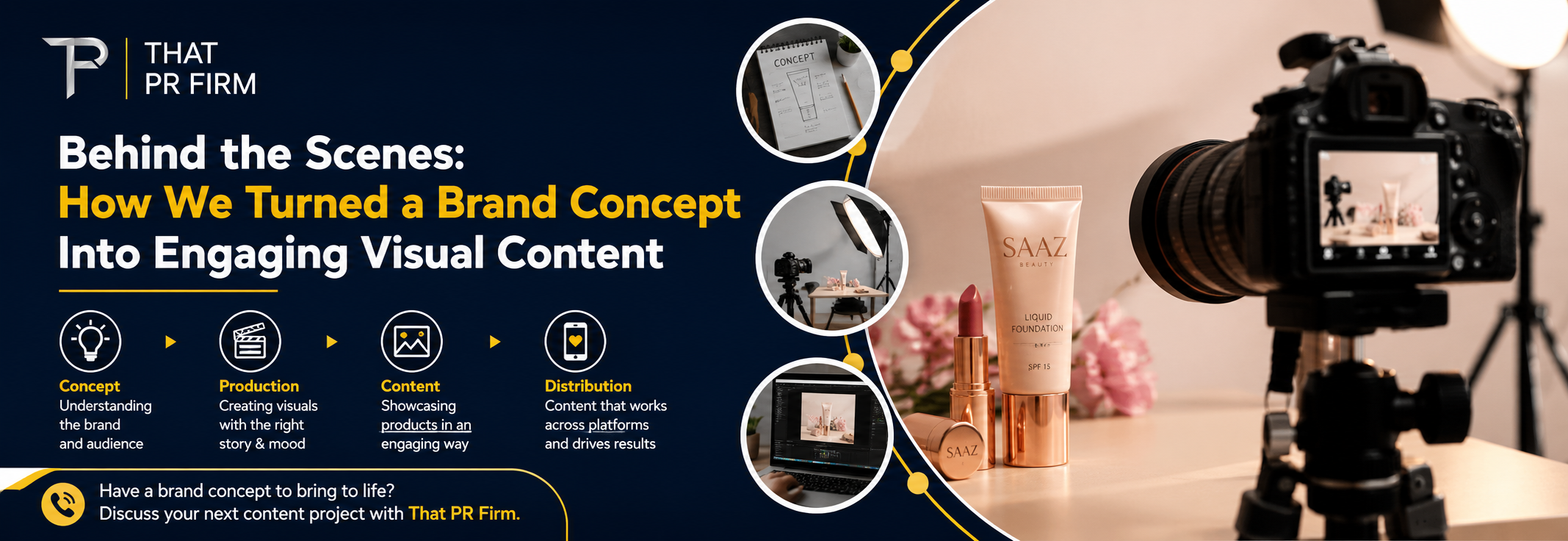
At That PR Firm, this is exactly how we approach content creation and production: with the bigger picture in mind. Our recent work with Saaz Beauty is a good example of how a brand concept gets transformed into content people actually engage with, through the right mix of strategy, creativity and execution.
Why Does Visual Content Matter for Brands?
Think about the last beauty product you noticed online. You probably don’t remember the caption. You remember how the product looked, how it was presented, or the feeling the content gave you.
That’s the power of visual storytelling.
For beauty brands especially, visuals help audiences understand a product fast. A lipstick shown in use. A skincare product placed inside a relatable routine. A makeup product framed through a lifestyle or transformation moment.
But content shouldn’t exist just because a brand needs something to post. It needs a reason behind it , one that answers:
- Who are we creating this for?
- What do we want the audience to understand?
- What makes this product relevant, right now?
- What should the viewer feel after seeing it?
- Where will this content actually be used?
Answer these before production starts, and the final content ends up sharper , and more purposeful , every time.
From Brand Concept to Visual Story: The Saaz Beauty Approach
Saaz Beauty makes accessible, affordable makeup and skincare , lipsticks, lip gloss, gels, kajal, sindoor. The brief wasn’t just “showcase the products.” The real opportunity was presenting them through content that felt relatable and easy for beauty audiences to connect with, which meant looking beyond the product itself.
1. Start With the Product and the Audience
Before a camera angle, location, or styling choice gets decided, you need to know what the product represents , and who’s actually buying it.
For a beauty brand, that could mean everyday makeup users, beauty enthusiasts, younger audiences, working professionals, or shoppers hunting for affordable alternatives. The audience shapes the visual language: everyday consumers respond to natural, relatable visuals; a premium launch calls for a more editorial approach.
The visual direction should fit the audience , never the other way around.
2. Build the Creative Direction Around the Story
Once you understand the product and the audience, the next question is how the story should look and feel. This is where a brand concept becomes a production plan.
For Saaz Beauty, the goal was making the products feel approachable rather than just displaying them against a backdrop [, using everyday routine-style visuals and relatable settings rather than a studio-only look]. Mood, setting, styling, composition, and how the product sits in the frame all work together toward one objective: make the product part of a story, not just the subject of a photo.
That story doesn’t need to be elaborate. A simple, well-executed idea will almost always beat an over-produced one that has no connection with the audience.
What Makes Beauty Content More Engaging?
Beauty content works best when viewers can picture themselves using the product. That’s why relatable storytelling outperforms straight product shots.
Instead of just showing a lipstick , show how it fits into an everyday look. Instead of just displaying skincare packaging , place it inside a routine people recognize. Context does the heavy lifting.
Make the Product the Hero
Every creative element , colour, props, styling, background, movement , should support the product, not compete with it. When everything fights for attention, audiences remember the visual and forget what it was selling. Good production knows when to add detail, and when to strip it back.
Keep It Natural
Audiences are savvy to highly produced advertising now. That doesn’t make polish ineffective , it means brands need to balance production value with authenticity. Content should feel like something people want to watch, not an ad forced into their feed. On social, that decision gets made within seconds.
Production Is More Than Shooting a Video
Production often gets treated as the final step after the idea is already locked. In reality, it shapes how well that idea actually lands. A production team has to translate the creative direction into visuals while keeping the brand, product, and audience in focus , through decisions on composition, product placement, styling, location, lighting, camera movement, talent, format, and edit.
The goal isn’t to overcomplicate production. It’s to make the idea work on screen.
This is also why production, content creation, and influencer marketing sit under one roof at That PR Firm , so brands aren’t stitching together separate vendors for what should be one connected process.
Create Content With Distribution in Mind
One of the most common mistakes: creating a single piece of content without thinking about where it’ll actually live. Distribution should be part of the plan from day one.
A single creative concept can become:
- Short-form social videos
- Product-focused reels
- Instagram content
- Campaign assets
- Influencer collaborations
- Website visuals
- Promotional creatives
That doesn’t mean posting identical content everywhere , it means adapting one strong idea across platforms and audiences. Plan for distribution upfront, and you get more mileage out of the same creative work, without losing consistency.
Why Content Creation and Production Work Better Together
A strong concept can fail through weak execution. Excellent production can’t save an idea that doesn’t connect. That’s why creative and production can’t work in silos , the creative team needs to understand the brand’s message, and the production team needs to know how to translate it visually.
Brands aren’t looking for someone to “shoot a video.” They’re looking for a partner who understands what they’re actually trying to achieve. That’s the gap an integrated approach closes.
How Agencies Can Help Brands Build Better Visual Content
Working with an agency brings strategy, creative thinking, and execution under one process. At That PR Firm, that means influencer marketing, production, public relations, content creation, campaign management, and social media management , all connected, not siloed.
That matters most when a brand wants its visual content to support a bigger campaign, not sit as a one-off post. For example, a beauty campaign might run like this:
Creative concept → Production → Content creation → Influencer activation → Social distribution → Campaign management
Each stage feeds the next. The result: a connected brand story, not a pile of unrelated posts.
What Brands Should Ask Before Starting a Content Project
Five questions to ask before your next visual content project:
- Who is the audience? Know who you want to reach before deciding how the content should look.
- What is the main message? If viewers remember only one thing, what should it be?
- Why would someone stop scrolling? Identify the visual or storytelling hook that creates curiosity.
- Where will the content be used? Plan formats and variations around your actual distribution channels.
- What action should the audience take? Awareness, engagement, product discovery, website visits, enquiries , pick one.
These five questions turn a vague content requirement into an actual creative brief.
Bringing Brand Ideas to Life With That PR Firm
The best visual content doesn’t start with a camera. It starts with an idea, an audience, and a reason to create.
The Saaz Beauty project shows how understanding the product, building the right creative direction, and producing with the audience front-of-mind can turn a simple brand concept into something people genuinely connect with.
At That PR Firm, we help brands bring ideas to life through content creation, production, influencer marketing and campaign management , building visual stories that feel relevant to the audience while supporting the brand’s wider marketing goals.
Have a brand concept you want to bring to life? Get in touch with That PR Firm and let’s talk about your next content project.
FAQs
1. How do you turn a brand concept into visual content?
Start by understanding the product, target audience and campaign objective. Then develop a creative direction, plan production and create visuals that communicate the brand story naturally.
2. What makes beauty content engaging on social media?
Beauty content performs better when it combines attractive visuals with relatability. Showing products in realistic situations, routines or looks can help audiences understand how the product fits their lives.
3. Why is creative direction important in content production?
Creative direction gives the production a clear purpose. It helps align the visual style, product presentation, mood and storytelling so that every element supports the brand rather than competing for attention.
4. Should brands plan content according to distribution channels?
Yes. Brands should consider where content will appear before production begins. Planning for social media, websites, campaigns and influencer collaborations can help content remain useful across multiple marketing activities.
5. What does a content creation agency do?
A content creation agency helps brands develop ideas and turn them into written or visual assets. Depending on the agency, services may include creative planning, production, video content and campaign support.
6. How can visual content help a beauty brand?
Visual content can demonstrate products, communicate brand personality and make products easier to understand. Consistent, audience-focused content can also help beauty brands build familiarity and engagement online.
7. Why should brands work with a production agency?
A production agency can bring creative planning and execution together. This helps brands translate concepts into professional visual content while maintaining consistency with their wider communication goals.
8. Can one content concept be used across multiple platforms?
Yes. A strong concept can often be adapted into different formats for social media, websites, influencer campaigns and advertisements. The content should be adjusted to suit each platform rather than duplicated exactly.