
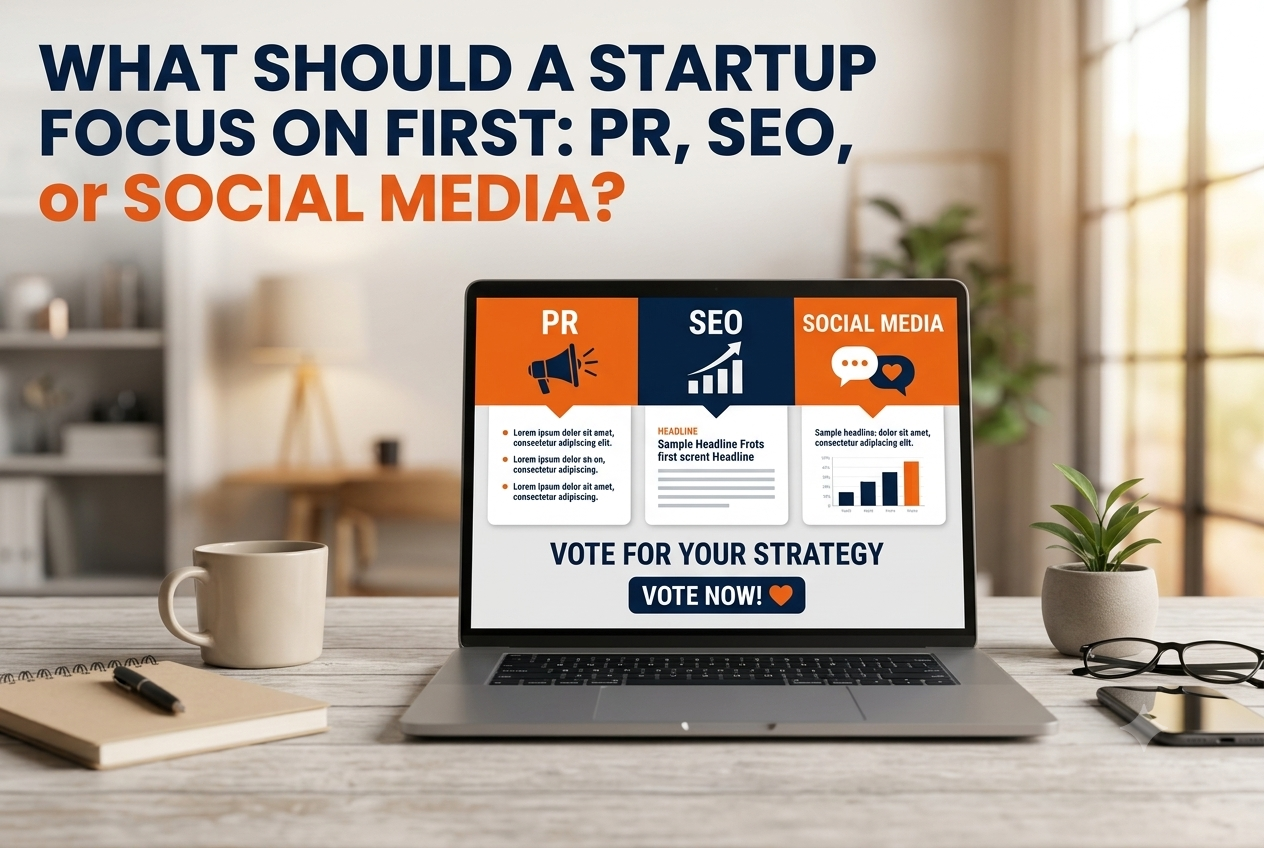
Launching a startup is exciting, but it also comes with a common challenge, limited budgets and countless marketing options. Founders often ask the same question: Should we invest in PR, SEO, or social media first?
The truth is, there isn’t a one-size-fits-all answer. Each marketing channel serves a different purpose in your business journey. The right strategy depends on your startup’s stage, goals, and target audience.
Let’s understand what each channel does and when you should prioritize it.
Understanding the Role of PR, SEO & Social Media
Think of these three marketing pillars as working together rather than competing against each other.
- PR builds credibility and trust.
- SEO brings long-term organic traffic.
- Social media creates engagement and brand awareness.
The biggest mistake startups make is focusing only on one while ignoring the others completely.
Start with PR if You Need Credibility
When you’re a new business, people don’t know who you are. Before customers buy from you, they need confidence that your company is genuine.
Public Relations helps you earn that trust through:
- Media coverage
- Founder interviews
- Industry publications
- Brand storytelling
- Product launch announcements
- Thought leadership articles
When potential investors, clients, or partners search your company online and find credible media mentions, your brand instantly appears more trustworthy.
If you’re launching a product, raising funding, or entering a competitive market, PR should be one of your earliest investments.
Many startups work with Top PR agencies in Mumbai to build brand authority, secure media coverage, and establish credibility during their initial growth phase.
Invest in SEO for Sustainable Growth
While PR creates visibility, SEO helps customers discover your business consistently through search engines.
Unlike paid ads, SEO keeps generating traffic long after your content is published.
Benefits include:
- Higher Google rankings
- Consistent website traffic
- Better lead generation
- Increased brand authority
- Lower customer acquisition costs over time
For example, if someone searches:
- Best accounting software
- Affordable interior designer
- Startup legal services
Your website should appear in those search results.
Startups that begin SEO early usually gain a significant advantage because organic rankings take time to build.
Focus on:
- Keyword research
- Helpful blog content
- Technical website optimization
- Fast page speed
- Local SEO
- Quality backlinks
SEO is a long-term investment that compounds over time.
Prioritize Social Media for Brand Awareness
Your audience spends hours every day on Instagram, LinkedIn, YouTube, Facebook, and X.
Social media helps startups:
- Build a community
- Humanize the brand
- Showcase products
- Educate customers
- Share customer success stories
- Generate conversations
However, social media alone rarely converts into sustainable business growth unless supported by strong content and a clear marketing strategy.
Consistency matters far more than posting daily without purpose.
Instead of chasing viral trends, focus on delivering value.
Where Does Influencer Marketing Fit?
Influencer marketing has become one of the fastest ways for startups to reach highly targeted audiences.
Rather than spending months building trust from scratch, startups can leverage creators who already have engaged communities.
A professional Influencer marketing agency in Mumbai can help startups identify relevant creators, manage collaborations, and deliver campaigns that increase awareness, website visits, and conversions.
The key is partnering with influencers whose audience genuinely aligns with your product rather than simply choosing creators with the largest follower counts.
What Should You Focus on First?
Here’s a practical roadmap based on your startup stage.
Stage 1: Idea or Product Launch
Priority:
- PR
- Social Media
- Basic SEO
Goal:
- Build credibility
- Generate initial buzz
- Create online presence
Stage 2: Early Growth
Priority:
- SEO
- PR
- Social Media
Goal:
- Increase organic traffic
- Capture search demand
- Build authority
Stage 3: Scaling the Business
Priority:
- SEO
- PR
- Social Media
- Influencer Marketing
- Paid Advertising
Goal:
Create an integrated marketing ecosystem where every channel supports the others.
Why Startups Shouldn’t Choose Only One
Many founders ask:
“Should I spend my entire budget on SEO?”
Or,
“Should I only focus on Instagram?”
The answer is no.
Here’s why:
PR builds trust.
SEO helps people find you.
Social media keeps your audience engaged.
Together, they create a complete customer journey.
Someone might first discover your startup through Instagram, search your company on Google, read a blog, find media coverage, and then decide to contact you.
Every channel strengthens the others.
Common Mistakes Startups Make
Avoid these pitfalls:
- Expecting SEO results within a few weeks
- Posting on social media without a content strategy
- Treating PR as a one-time activity instead of an ongoing effort
- Ignoring website optimization
- Chasing followers instead of meaningful engagement
- Measuring vanity metrics rather than business outcomes
Successful startups focus on sustainable growth rather than quick wins.
Building a Balanced Marketing Strategy
An effective startup marketing plan doesn’t require a massive budget, it requires the right priorities.
Start by creating credibility through PR, build long-term visibility with SEO, and nurture relationships through social media. As your business grows, add influencer collaborations, email marketing, and paid campaigns to amplify your reach.
If you’re seeking expert guidance, experienced PR firms in Mumbai can help align your communication strategy with your growth objectives while ensuring your brand reaches the right audience.
Why Many Startups Choose That PR Firm
Growing a startup requires more than just media coverage or social media posts, it requires a strategic approach to building visibility and trust.
That PR Firm helps startups create integrated marketing strategies by combining PR, digital visibility, influencer collaborations, and brand storytelling. Instead of focusing on a single channel, the team works to ensure every marketing effort supports long-term business growth.
Businesses looking for experienced guidance often evaluate the top pr agencies in mumbai, and choosing a partner that understands both brand building and digital marketing can make a significant difference during the early stages of growth.
Final Thoughts
The question isn’t whether PR, SEO, or social media is the best investment, it’s which one your startup needs most right now.
If your goal is trust and visibility, begin with PR. If you want sustainable, long-term lead generation, invest in SEO. If your focus is building a loyal community and engaging directly with customers, prioritize social media.
The strongest startups don’t rely on a single channel. They combine PR, SEO, and social media into a cohesive strategy that builds credibility, drives organic traffic, and creates lasting customer relationships. When these efforts work together, startups are better positioned to grow consistently and compete effectively in an increasingly crowded market.
Frequently Asked Questions (FAQs)
1. Should a startup invest in PR or SEO first?
It depends on your business goals. If you’re launching a new brand or product and need credibility, PR should come first. If your goal is long-term organic traffic and lead generation, SEO is the better investment. Ideally, startups should gradually invest in both for sustainable growth.
2. Is social media enough to grow a startup?
Social media is excellent for building brand awareness and engaging with your audience, but it shouldn’t be your only marketing strategy. Combining social media with SEO and PR helps increase visibility, trust, and customer acquisition over the long term.
3. When should a startup start investing in SEO?
The earlier, the better. SEO takes time to deliver results, so starting during the early stages helps build website authority, improve Google rankings, and generate consistent organic traffic as your business grows.
4. How does PR help a startup build credibility?
Public Relations helps startups gain media coverage, share founder stories, announce product launches, and establish thought leadership. Positive media mentions increase brand trust among customers, investors, and business partners.
5. Is influencer marketing useful for startups?
Yes. Influencer marketing can quickly increase brand awareness and help startups reach targeted audiences. Working with relevant creators allows startups to build trust faster and generate engagement, website traffic, and potential customers.
6. Can PR, SEO, and social media work together?
Absolutely. PR builds brand credibility, SEO improves search visibility, and social media strengthens audience engagement. When combined, these channels create a powerful marketing strategy that drives awareness, trust, website traffic, and business growth.