
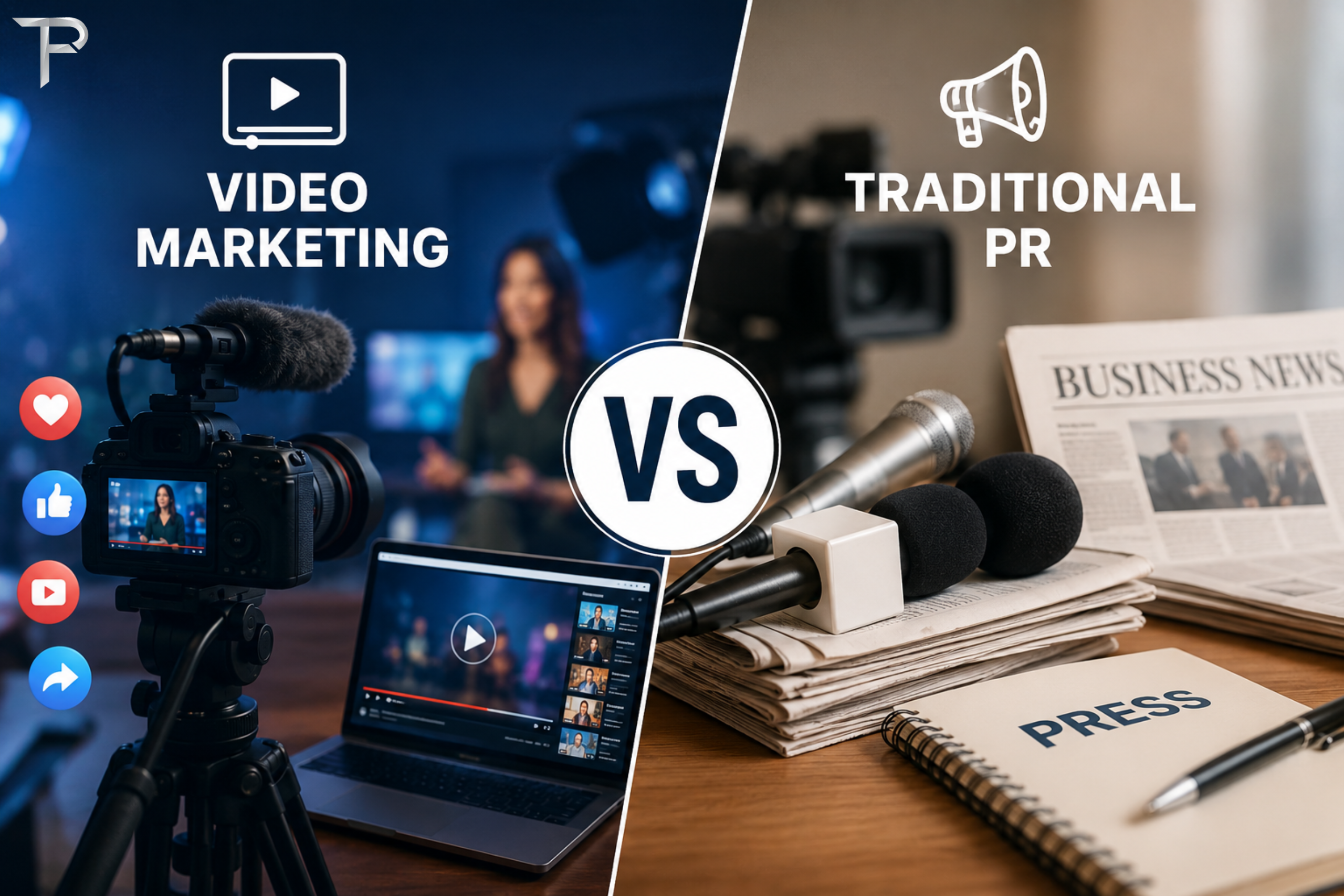
In today’s fast-moving digital world, businesses have more ways than ever to connect with their audience. Two of the most popular approaches are Video Marketing and Traditional Public Relations (PR). While both aim to build brand awareness, trust, and engagement, they work in very different ways.
Many business owners often ask: Should I invest in video marketing or traditional PR? Which one delivers better results? Businesses working with the top PR agencies in Mumbai often face this same question when planning their marketing and communication strategies.
The truth is that both have unique strengths. The right choice depends on your goals, target audience, budget, and timeline. In this blog, we’ll break down the differences, compare their effectiveness, and help you understand which strategy can bring the best results for your brand.
Understanding Traditional PR
Traditional PR focuses on managing a brand’s public image through media coverage, press releases, interviews, news articles, events, and relationships with journalists.
The goal of PR is to earn media attention rather than pay for it.
Some common PR activities include:
- Press releases
- Media outreach
- Newspaper and magazine features
- TV and radio interviews
- Event publicity
- Crisis management
For example, when a startup secures coverage in a leading business publication, it gains credibility because the story is being shared by a trusted third-party source.
Benefits of Traditional PR
- Builds credibility and trust
- Enhances brand reputation
- Helps businesses reach wider audiences through media channels
- Supports long-term brand positioning
- Effective during product launches and major announcements
What is Video Marketing?
Video marketing involves creating and sharing video content to promote a brand, product, service, or message.
Videos can be shared through:
- Websites
- YouTube
- Instagram Reels
- TikTok
- Email campaigns
Common types of video content include:
- Brand videos
- Product demonstrations
- Customer testimonials
- Behind-the-scenes content
- Explainer videos
- Event coverage
Video marketing allows businesses to communicate their message quickly and visually.
Benefits of Video Marketing
- Captures attention faster
- Increases engagement
- Improves information retention
- Boosts website conversions
- Enhances social media performance
- Generates measurable results
The Numbers Tell an Interesting Story
Let’s look at some real-world statistics.
Research consistently shows that people prefer watching videos over reading lengthy text content.
Some commonly reported industry findings include:
- Viewers retain significantly more information from videos compared to text alone.
- Social media posts with videos often receive higher engagement than static posts.
- Many consumers say they are more likely to purchase a product after watching a video about it.
- Video content frequently increases time spent on websites.
These trends explain why businesses across industries are investing heavily in video production and visual content.
Comparing Video Marketing and Traditional PR
1. Reach
Traditional PR
PR can provide massive exposure when a story is featured in a respected publication or media outlet. For example, a feature article in a national newspaper may reach hundreds of thousands of readers.
However, media coverage depends on editorial approval, and there is no guarantee that your story will be published.
Video Marketing
Video content can be distributed instantly across multiple platforms.
A single video can reach thousands, or even millions, of viewers if it resonates with the audience.
Winner: Video Marketing
The ability to publish directly and reach audiences immediately gives video marketing an advantage.
2. Trust and Credibility
Traditional PR
Media coverage acts as third-party validation.
People often trust information published by respected news organizations more than brand-created content.
For example, if a healthcare company is featured in a leading publication, readers may view the brand as more trustworthy.
Video Marketing
Videos can build trust through transparency, testimonials, and behind-the-scenes content, but they are still brand-controlled.
Winner: Traditional PR
When it comes to credibility, earned media remains incredibly powerful.
3. Audience Engagement
Traditional PR
Readers may consume the content and move on.
Interaction is generally limited.
Video Marketing
Videos encourage likes, comments, shares, saves, and direct engagement.
Platforms like Instagram and YouTube are built around user interaction.
Winner: Video Marketing
The interactive nature of video creates stronger audience engagement.
4. Measurability
Traditional PR
Measuring PR success can be challenging.
Metrics often include:
- Media mentions
- Share of voice
- Brand sentiment
- Estimated reach
Video Marketing
Video performance can be tracked precisely through:
- Views
- Watch time
- Click-through rates
- Conversions
- Audience retention
Winner: Video Marketing
The data available makes optimization much easier.
5. Long-Term Brand Building
Traditional PR
PR helps establish authority over time.
Consistent media coverage strengthens brand reputation and industry leadership.
Video Marketing
Video creates awareness and engagement but may not always provide the same level of authority as editorial coverage.
Winner: Traditional PR
For long-term reputation management, PR continues to play a vital role.
Real-World Example: Apple
Consider how Apple approaches communication.
When launching a new product, Apple uses:
- High-quality videos to showcase features
- PR outreach to secure media coverage
- Press events for journalists
- Product demonstrations
The result?
Millions of video views combined with extensive media coverage.
This approach demonstrates that successful brands rarely choose one strategy over the other. They use both together.
Which Strategy Delivers Better ROI?
If your goal is:
Quick Engagement and Lead Generation: Choose Video Marketing. Video can quickly capture attention, generate traffic, and drive conversions.
Building Trust and Authority: Choose Traditional PR. Media coverage strengthens credibility and reputation.
Growing a Brand Sustainably: Use Both. The most successful businesses combine PR and video marketing to maximize visibility and trust.
The Future: Integrated Communication
Today’s consumers want information that is:
- Visual
- Authentic
- Easy to consume
- Trustworthy
This means businesses need a strategy that combines storytelling, video production, photography, media relations, and digital PR.
For example:
A company launches a new product.
Step 1: Create a professional launch video.
Step 2: Distribute it on social media.
Step 3: Issue a press release.
Step 4: Secure media coverage.
Step 5: Repurpose the coverage into additional video content.
This integrated approach creates multiple touchpoints and significantly increases visibility.
Final Thoughts
So, which delivers better results: Video Marketing or Traditional PR?
The answer isn’t as simple as choosing one over the other. Video marketing excels at grabbing attention, increasing engagement, and delivering measurable results. Traditional PR excels at building trust, authority, and long-term reputation.
Brands that combine both strategies often achieve the strongest outcomes.
At That PR Firm, we help businesses create impactful communication strategies that combine public relations, video production, photography, and visual storytelling. Like many leading PR firms in Mumbai, we believe that bringing these elements together helps brands build credibility, connect with audiences, and create lasting impressions in an increasingly competitive marketplace.
In today’s digital-first world, the real winner isn’t Video Marketing or Traditional PR, it’s the smart combination of both.